
elementos vivos de fachada.
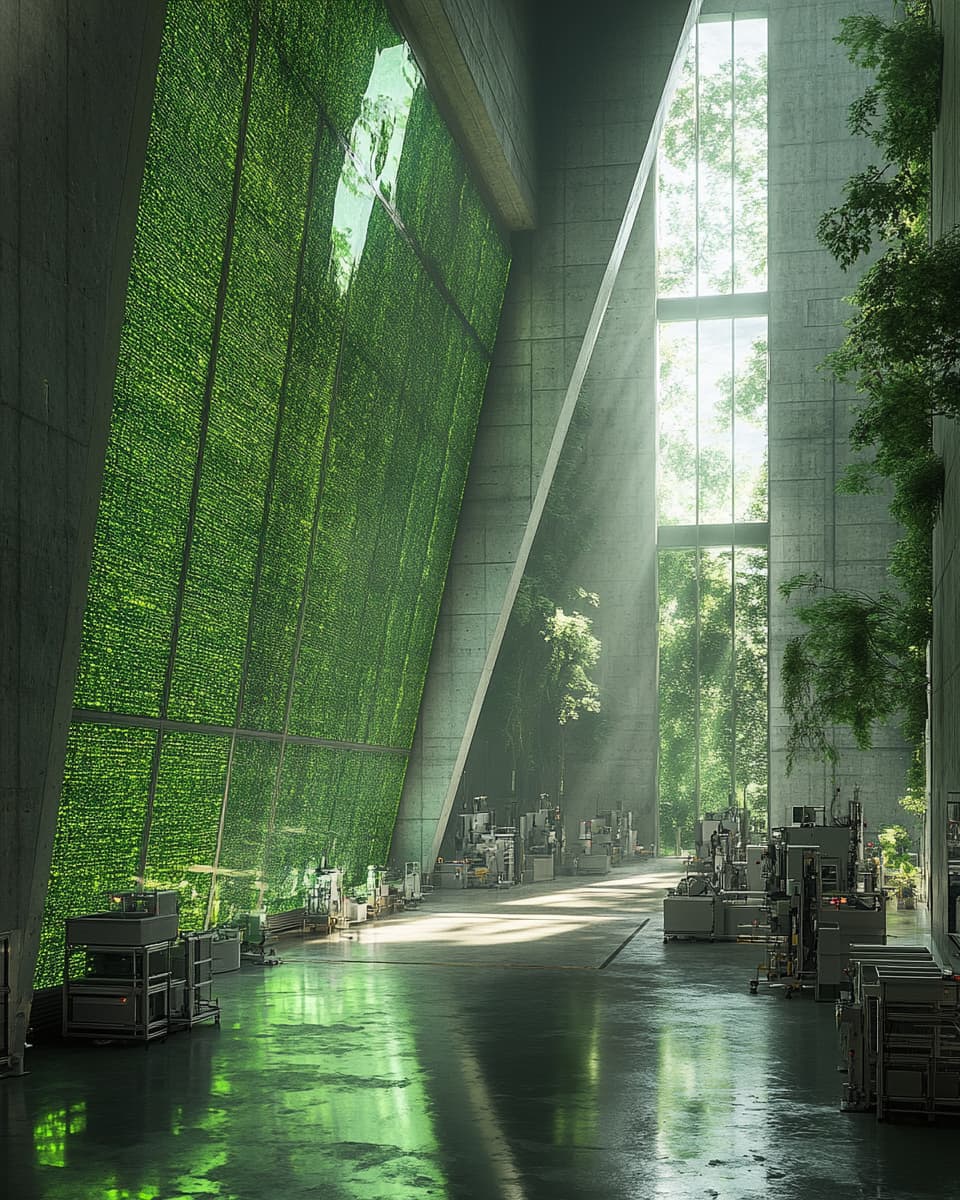
un diseño especulativo donde la piel del edificio aloja algas en vez de silicio, transformando fachadas en biofábricas urbanas que producen energía, biomasa y aire limpio.
otro tipo de panel solar.
facc · futuras adaptaciones al cambio climático. un diseño especulativo anclado en la biofísica, cuestionando forma y función.
el problema
la mayoría de las fachadas son superficies estáticas. cuando producen energía, suele ser a través de paneles fotovoltaicos que solo capturan luz. eso deja sin usar otros recursos ambientales, mientras las ciudades siguen dependiendo de redes basadas en combustibles fósiles.
el concepto
las fachadas vivas usan biorreactores de algas integrados en paneles o sistemas de vidrio. en vez de solo cosechar luz solar, convierten dióxido de carbono y agua en biomasa, creando una fuente renovable de energía y calor, y filtrando el aire de paso.
la lógica de diseño
las microalgas circulan dentro de módulos transparentes en la fachada. la luz solar impulsa la fotosíntesis, la biomasa puede recolectarse para biocombustible, y el proceso genera energía térmica como subproducto. a diferencia de la fotovoltaica, las algas integran ciclos biológicos en la arquitectura, convirtiendo la piel del edificio en un organismo activo.
el impacto potencial
las fachadas de algas podrían transformar los edificios en biofábricas urbanas: reduciendo carbono, produciendo energía, reformulando cómo vemos las superficies de la ciudad. más allá del desempeño, desafían la idea de la fachada como objeto inerte. el mensaje: la generación de energía no tiene que ser silicio. puede estar viva.
lecturas adicionales
- biq house, hamburgo, el primer prototipo de fachada propulsada por algas
- informes de arup + spore initiative sobre biofachadas
- algae building technology, investigación del fraunhofer institute en fotobiorreactores
- bioenergy from microalgae, renewable and sustainable energy reviews
- future skins: living building envelopes, estudios académicos sobre envolventes bio-integradas
diseñamos edificios para el futuro, no para el pasado. hablemos.