
cosechar agua en una tierra que se seca.
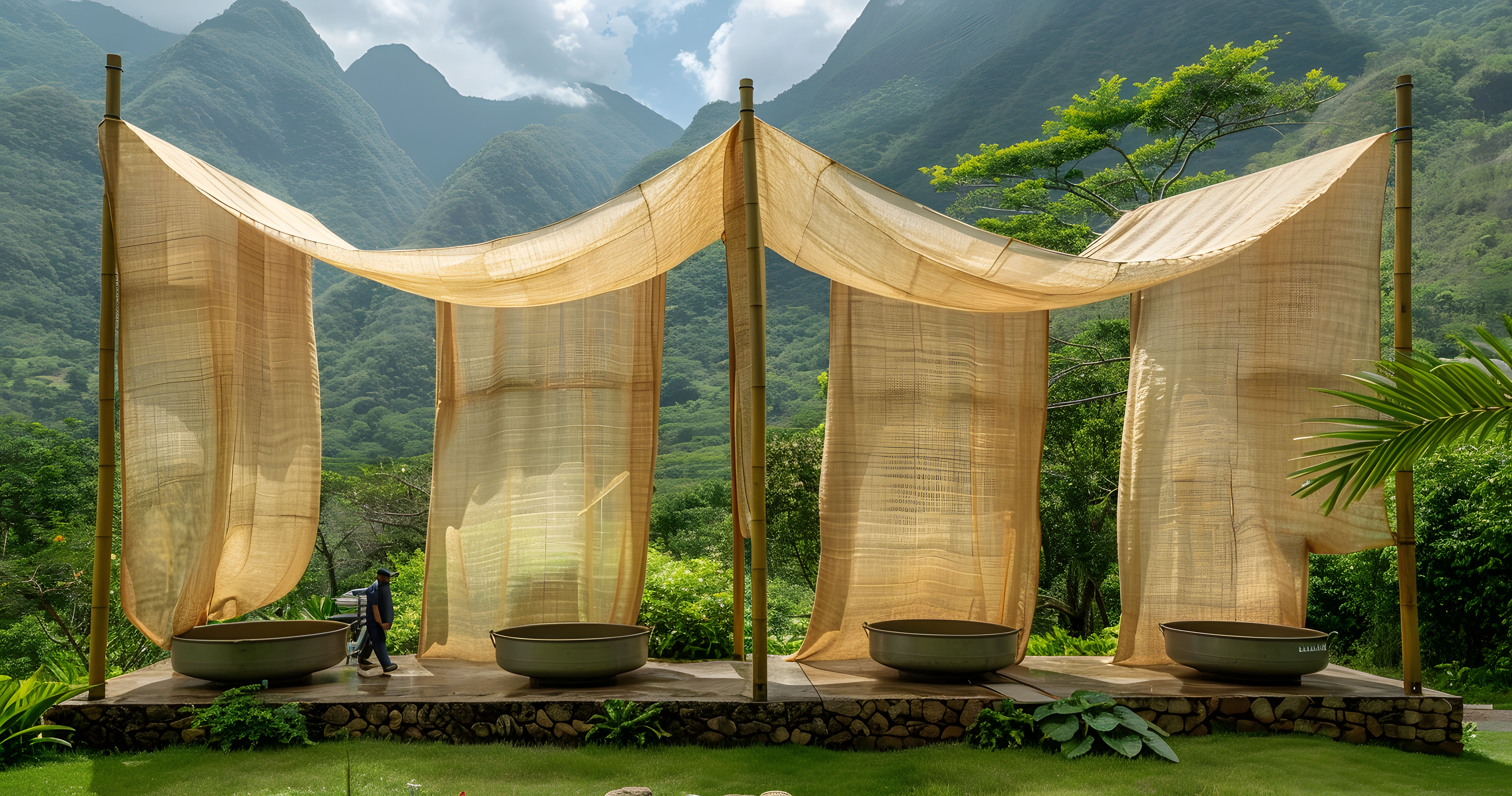
un diseño especulativo: ¿y si los edificios se volvieran cosechadores atmosféricos? estructuras textiles que condensan niebla, rocío y lluvia hacia el almacenamiento, borrando la línea entre refugio e infraestructura hídrica.
el agua es, sin sorpresa, más valiosa para los humanos que el petróleo.
facc · futuras adaptaciones al cambio climático. una serie de diseños especulativos anclados en la ciencia, estirados para provocar debate.
el problema
el agua vale más que el petróleo, y aun así seguimos desperdiciándola. en un mundo que se calienta, las sequías se intensifican, los patrones de lluvia cambian y los acuíferos se agotan. la infraestructura construida para la abundancia falla bajo la escasez, dejando ciudades y paisajes expuestos.
el concepto
la arquitectura futura podría evolucionar hacia cosechadores atmosféricos: estructuras que capturan niebla, rocío y lluvia, las almacenan y las desvían a donde más se necesitan. membranas textiles, drapeados de sombra y superficies a gran escala podrían funcionar también como colectores, borrando la línea entre refugio e infraestructura hídrica.
la lógica de diseño
telas ligeras y materiales porosos pueden condensar humedad del aire, guiando las gotas hacia depósitos. los sistemas de recolección de lluvia pueden integrarse en fachadas y cubiertas, mientras los dispositivos de sombra reducen la evaporación. estas formas híbridas convierten el control ambiental en captura de recursos, haciendo que cada metro cuadrado de superficie sea una herramienta de resiliencia.
el impacto potencial
integrar la cosecha de agua en la arquitectura descentraliza el suministro, reduce la dependencia de redes sobrecargadas y otorga autonomía a las comunidades. más que una solución técnica, replantea los edificios como participantes activos en los ciclos hidrológicos: infraestructura viva diseñada para resguardar el recurso más esencial.
lecturas adicionales
- fogquest, ong pionera en proyectos de captación de niebla
- atmospheric water harvesting: materials and structures, nature reviews materials
- informe de unesco sobre escasez global de agua y adaptación
- warka water tower, prototipo de cosecha atmosférica de baja tecnología
- water futures: design for the age of scarcity, colección de investigación en diseño
diseñamos edificios para el futuro, no para el pasado. hablemos.