
por qué la simulación va primero.
una nota corta sobre por qué simulamos antes de dibujar, y por qué el orden importa más que el software.
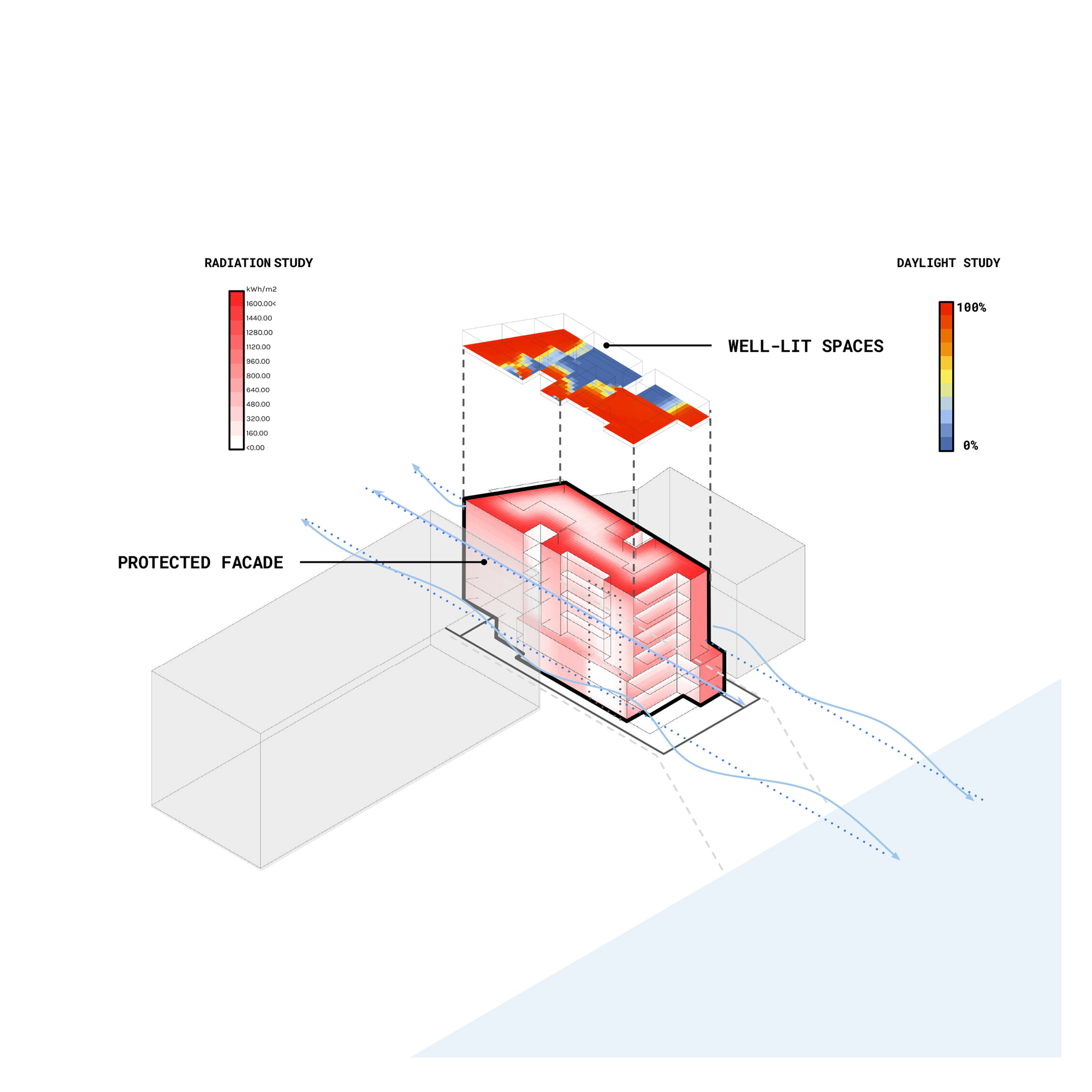
la mayoría de las prácticas de arquitectura que hablan de simulación la corren después de comprometer el diseño. para entonces, la simulación solo puede verificar, y la verificación es la parte que produce un número, pero el número llega demasiado tarde para discutir con el diseño que lo produjo.
nosotros trabajamos al revés. la primera simulación que corremos en un proyecto se hace antes de que exista el diseño. es pequeña, rápida, y hace una sola pregunta: ¿qué orientación cuesta menos enfriar? ¿qué cara necesita más sombra? ¿dónde falla la luz natural al mediodía?
la simulación que responde esas preguntas rara vez es la misma que le pasamos al ingeniero al final. es más pequeña, más rápida, y le falta la mayoría de lo que una simulación final necesita. no tiene que ser precisa para ser útil. tiene que ser temprana.
tres usos para una simulación temprana
radiación sobre la masa. la simulación más barata posible: un bloque, el archivo climático, y un año de exposición solar. esta es la simulación que elige la orientación, dimensiona la profundidad de la sombra y te dice en qué cara poner el vidrio. corre en minutos y hace por ti el primer movimiento del proyecto.
luz natural en el plano de los asientos. una lectura de iluminancia útil (udi) en el lugar donde la gente realmente trabaja. esta es la simulación que discute con plantas profundas, techos bajos, y la tentación de empapelar las paredes. cuesta horas, no días.
carga por variante de envolvente. la simulación que compara tres o cuatro envolventes razonables. aquí es donde el chiller se hace más pequeño, no porque el ingeniero lo haya dimensionado con cuidado, sino porque el edificio pidió menos.
cada uno es una conversación pequeña. ninguno es un entregable. ese es el punto. la simulación no está ahí para convencer a alguien, está para hacer una decisión más fácil de lo que habría sido sin ella.
lo que no hacemos
no corremos una única simulación final, terminada y bonita al final del proyecto. no la metemos en el deck. no la imprimimos en una lámina. para cuando puedes hacer una simulación así de bonita, el edificio ya decidió lo que quiere ser, y la simulación es documentación. la documentación está bien, pero la simulación que se ganó el diseño es la que corrió en la semana dos.
esa es la parte aburrida. también es donde viven los ahorros.