
why the simulation comes first.
a short note on why we simulate before we draw, and why the order matters more than the software.
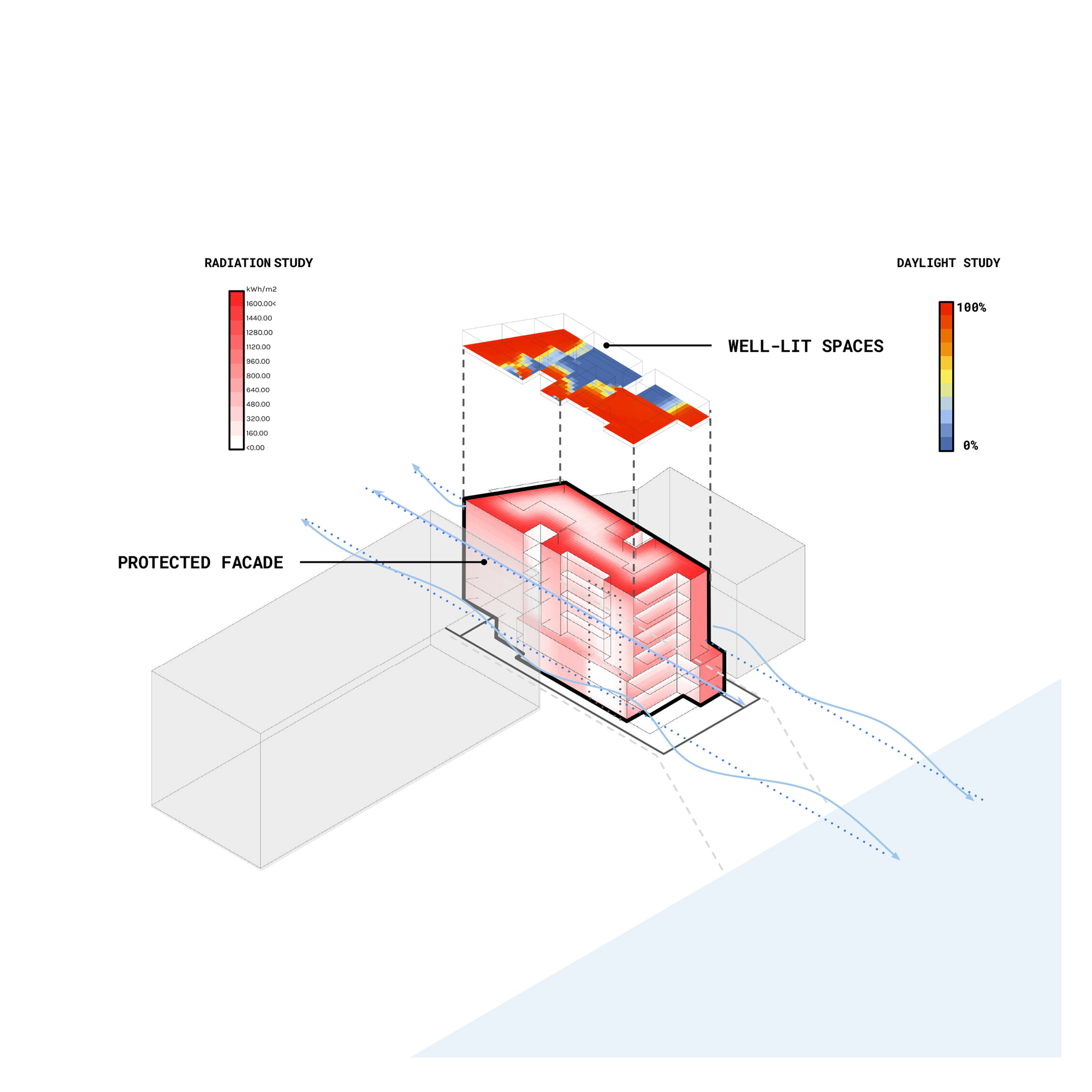
most architecture practices that talk about simulation reach for it after the design is committed. by then the simulation has nothing to do but verify, and verification is the part that produces a number, but the number arrives too late to argue with the design that produced it.
we work the other way around. the first simulation we run on a project is asked before the design exists. it’s small, fast, and asks a single question: which orientation costs the least to cool? which face needs the most shade? where does the daylight fail at noon?
the simulation that answers those questions is rarely the same one we hand to the engineer at the end. it’s smaller, faster, and missing most of what a final simulation needs. it doesn’t have to be accurate to be useful. it has to be early.
three uses for an early simulation
radiation on the massing. the cheapest possible simulation: a block, the climate file, and a year of solar exposure. this is the simulation that picks the orientation, sizes the shading depth, and tells you which face to put the glazing on. it runs in minutes and it makes the first move of the project for you.
daylight at the seating plane. a useful daylight illuminance reading at the place people actually work. this is the simulation that argues with deep plans, low ceilings, and the temptation to wallpaper the walls. it costs hours, not days.
load by envelope variant. the simulation that compares three or four reasonable envelopes. this is where the chiller gets smaller, not because the engineer sized it carefully, but because the building asked for less.
each one is a small conversation. none of them are a deliverable. that’s the point. the simulation isn’t there to convince someone, it’s there to make a decision easier than it would have been without it.
what we don’t do
we don’t run a single, finished, beautiful simulation at the end of a project. we don’t put it in the deck. we don’t print it on a board. by the time you can make a simulation that beautiful, the building has already decided what it wants to be, and the simulation is documentation. documentation is fine, but the simulation that earned the design is the one that ran in week two.
that’s the boring part. it’s also where the savings live.